Understand
Use physiology and glossary pages to learn the language. A short vocabulary of aerobic base, training load and recovery window makes later guides much easier to follow. Begin with the physiology overview.
This route introduces the Palmus library in a sensible order: context, observation, practice and review. It is written for adults aged 35 and above who would like to understand their training before changing it.
Open the glossary
Most of the library can be read through three simple movements. Each one has a matching set of pages, so a new reader can follow the thread without opening everything at once.
Use physiology and glossary pages to learn the language. A short vocabulary of aerobic base, training load and recovery window makes later guides much easier to follow. Begin with the physiology overview.
Choose one repeatable signal from your current routine, such as weekly minutes or perceived effort. Observation means writing it down for several weeks without trying to improve it yet.
Make a small change and review the response across time. One variable at a time keeps cause and effect readable and keeps the change easy to reverse.
The stages below suggest a pace for a new reader. They can be compressed or stretched, and nothing is lost by moving slowly.
Spend an evening with the glossary. Note the five or six terms that appear most often, such as heart-rate zone and progressive overload.
Write a plain description of the activity you already do: days, durations, sleep and work demands. This becomes the context for everything else.
Pick the guide that matches your main interest, either cardio, strength or mobility, and read it once without taking action.
Choose a single change that can be reversed easily, and keep every other part of the week the same.
After three or four weeks, compare notes. Decide whether to keep, adjust or pause the change, and consider sharing the notes with a qualified professional.
Readers arrive with different situations. The matrix suggests a first guide and a second step for several common starting points.
| If your situation is... | Start with | Then read | Suggested pace |
|---|---|---|---|
| Returning to exercise after a long break | This route and the glossary | Endurance notes | Two short reading sessions a week |
| Already active but unsure how to organize the week | Program design | Recovery guide | One guide per week |
| Interested in strength and technique | Strength principles | Mobility guide | Read, then observe for two weeks |
| Curious about wearables and measurement | Methodology | Cardio guide | Read both before changing any device settings |
| Concerned about sleep and fatigue | Sleep and training | Recovery guide | Keep a sleep note for two weeks |
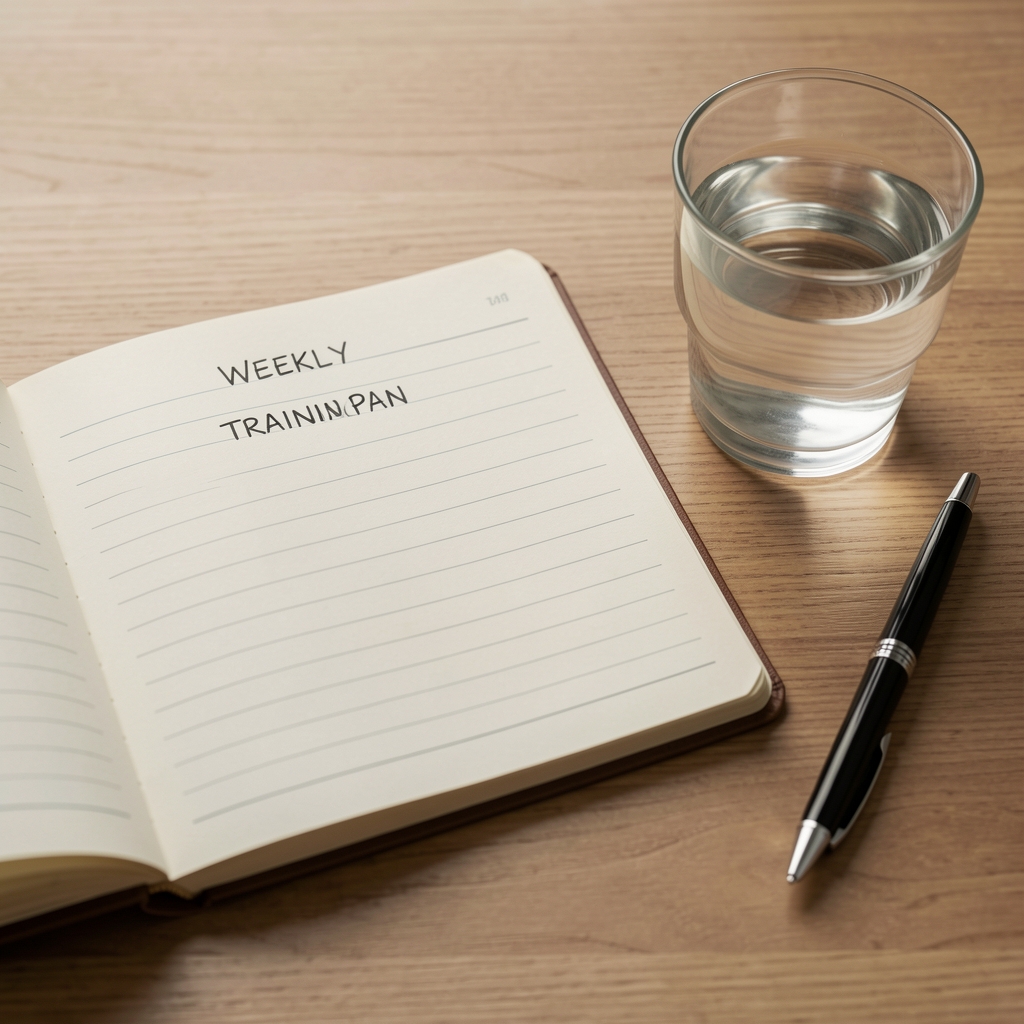
A modest change is easier to understand and easier to reverse. If symptoms, unusual discomfort or medical concerns arise, pause and seek qualified care.
Good first experiments are specific and low in cost. Examples include adding one ten-minute walk on a fixed weekday, moving a strength session to a time of day with more energy, or recording perceived effort after every session for three weeks.
A short list to review in your own time. The boxes are for your own tracking on this page and are not saved.
Read the full FAQNo. Minutes, perceived effort and a short written note are enough. A device can be added later if it answers a question you already have.
Many readers take about a month, but there is no schedule. Slower is acceptable, and returning to an earlier stage is a normal part of the process.
Use the library as a source of vocabulary and questions to bring to your coach. Palmus does not replace individual coaching or medical advice.
If you have a known health condition, take regular medication, or have noticed chest discomfort, unexplained breathlessness or dizziness, speak with a qualified health professional before beginning. The route above is general and cannot account for individual circumstances. For urgent symptoms in Indonesia, contact local emergency services or the nearest hospital.