Anchor
Keep one or two sessions stable enough to become reference points. A weekly Tuesday walk of the same length, or a Saturday strength session with the same movements, gives later notes something to be compared against.
Explore ways to organize endurance, strength and recovery without pretending that every week has the same capacity. The guide describes structures that adults aged 35 and above can adapt around work, family and local conditions.
Build your reading route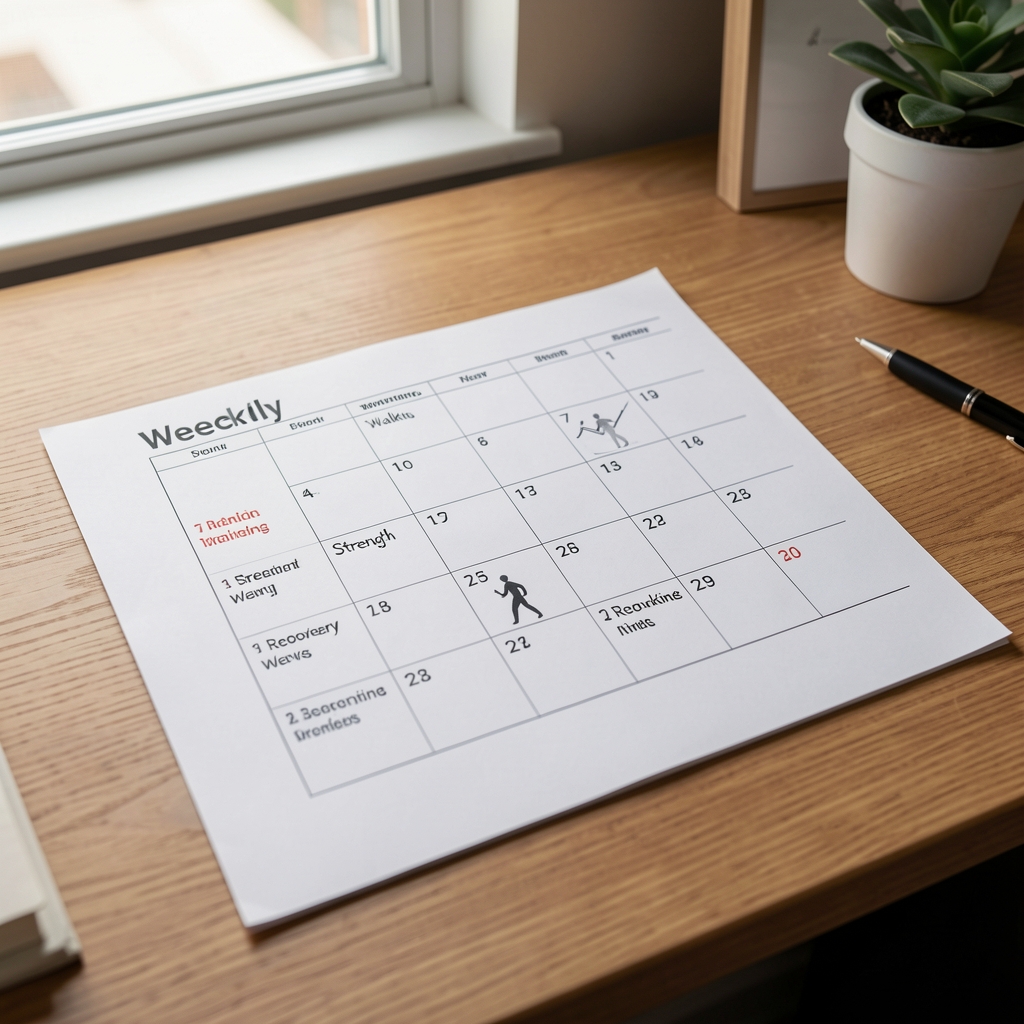
Most sensible weekly plans can be described with three ideas. They are deliberately simple so that a plan can be explained to a coach, a partner or a health professional in a few sentences.
Keep one or two sessions stable enough to become reference points. A weekly Tuesday walk of the same length, or a Saturday strength session with the same movements, gives later notes something to be compared against.
Place demanding work where recovery and schedule can support it. Avoid stacking a hard strength day directly after a long endurance outing, and leave room for ordinary rest.
Use a lower-demand version when life or readiness changes. A shorter session done calmly often keeps a routine alive better than skipping the week.
The matrix links the number of days a reader can reasonably train with a way of organizing them. The structures are examples for discussion and can be adjusted with a coach.
| Days available | Possible structure | Focus | Related guide |
|---|---|---|---|
| 2 days | One whole-body strength session and one steady aerobic session | Keeping both qualities in the week | Strength, Cardio |
| 3 days | Two strength sessions with different emphasis, one longer easy aerobic session | Meeting common activity guidance gradually | Endurance |
| 4 days | Two strength, two aerobic, one short mobility block on a fifth day | Variety with space between demanding days | Mobility |
| 5 days | Alternate strength and aerobic work, include at least one full rest day | Structured recovery | Recovery |

If a plan cannot be explained clearly, it may contain more complexity than the current goal requires. Keep the reason for each session visible.
A one-page weekly outline is usually enough. Each line can state the day, the type of session, its intended effort and the reason it is placed there. When a week is disrupted, the outline shows which sessions can be shortened and which should be moved rather than skipped.
Definitions of training load, progressive overload and recovery window used throughout planning discussions.
Open the glossaryAn explanation of how Palmus reads evidence and why plans are presented as examples rather than prescriptions.
Read the methodologyShort answers about session length, rest days and how to react when a week does not go as planned.
See the FAQTravel, deadlines, illness and family commitments interrupt most plans at some point. A program that can absorb these interruptions is more useful than one that only works in an ordinary week.
When time is limited, keep the session type and reduce its length. A twenty-minute walk or a single circuit of basic strength movements maintains the habit and keeps notes continuous, which makes the following week easier to read.
If a session is missed, consider moving it to the next suitable day rather than doubling up. Two demanding sessions on consecutive days can leave little room for recovery and make the notes harder to interpret.
“A plan is a hypothesis about the next four weeks. It becomes useful when it is written clearly enough to be tested and revised.”
— Palmus editorial note
The structures on this page are general examples written for educational purposes. They do not account for individual health history, medication, injury or current fitness. Please consult a qualified health or exercise professional before beginning a new program, and see the disclaimer for further detail.